


Do you catch yourself holding your breath?
Breathing. We all do it. It’s something our bodies instinctively do without thinking about it. What’s all this fuss about mastering our breathing? Just because we breath doesn’t necessarily mean we are breathing in optimal ways for mental and physical health.
Well, you are not alone. Research proves that this method is our body’s way of safeguarding our emotions. The influence of this finding is by the controversial legacy of Wilhelm Reich (protégé of Sigmund Freud). Controversial why? Reich went to a whole new level of research. He asked his patients to explore releasing emotions. He used techniques like deep breathing, and physical manipulation to release emotional blockages. To put it lightly, if you’ve heard of Reich then some agree that his research was rather… stark. Like most geniuses, there’s always a method to their madness. Reich developed insights into a method known as muscular ‘character armour’. In simple terms, our character is shielded by our muscles. It involves identifying patterns in muscle tension or constricted breathing. These patterns hide strong emotions from becoming conscious. They block our awareness and expression of emotions. Over time, if this unconsciousness awareness continues to be ongoing it
limits our capacity to engage in the flexibility of emotions and behaviours that are needed to develop a full and satisfying life – The Journal of Bodywork and Movement Therapies.
The Journal further describes how our inbuilt emotional intelligence determines bodily function. This function is particularly evident in our breathing and muscular system.
Are you holding your breath while reading this blog?
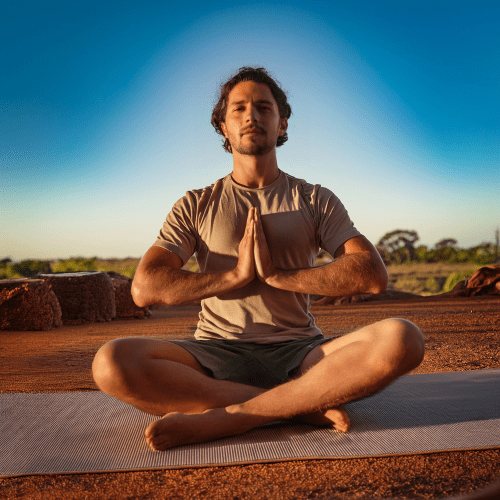
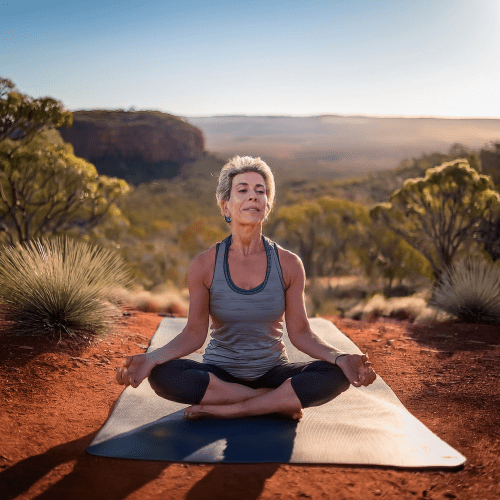
In yoga, breathing regulation (pronounced “pranayama” in Sanskrit) is described by the Yogas Sutra of Patanjali (Sutra 2.52) in how it teaches us that wherever the mind goes the prana’ follows. If the mind is controlled, the breath is controlled. Even if ice, water, and steam are the same compound, they are controlled in different stages. The physical body, movement of breath, our senses, and mind are an order of control. Patanjali details that “from pranayama, the covering of the inner light is removed”.
How can you release muscle tension through breath control?
Try these 3 pranayama exercises yogis love.
Explore the below video tutorials in your own time. Save this page for later. Revisit it as many times as you need. Remember to find a suitable quiet moment in your day without external distractions.
1. Nadi Shodhana (Alternate Nostril Breathing)
Nadi Shodhana balances the autonomic nervous system by alternating nostril breaths to harmonise left-right brain hemispheres and Ida-Pingala nadis for emotional equilibrium and spiritual prana flow.
Sit comfortably with a straight spine, use your right thumb to close the right nostril and inhale slowly through the left, then close the left nostril with your ring finger and exhale through the right, reverse and repeat for 5-10 cycles to balance energy channels.
2. Ujjayi Pranayama (Ocean Breath)
Ujjayi calms the vagus nerve through throat-constricted oceanic exhalations to activate the parasympathetic response, fostering inner luminosity and meditative absorption (dharana) toward self-realisation.
Sit or lie down relaxed, inhale deeply through the nose while slightly constricting the throat to create a soft ocean-like sound, then exhale through the nose with the same gentle constriction, maintaining even breaths for 5-10 rounds to calm the mind.
3. Bhramari Pranayama (Bee Breath)
Bhramari vibrates the cranial nerves with humming bee-like exhales to soothe the pineal gland, releasing tension in the third eye chakra for profound stress relief and heightened intuitive awareness in yogic sadhana.
Sit upright with eyes closed, place your index fingers on your ears or cover them lightly with your palms, inhale deeply through the nose, then exhale slowly while humming a steady “mmm” sound like a bee for 5-7 rounds to reduce stress and enhance focus.
What have you observed about your breath today? Submit your comments below to engage with our community. Or, engage in our socials via Facebook and Instagram.
Disclaimer: The yoga teachings, videos, and advice shared on this blog are not intended to diagnose any disease. They are not meant to treat or cure any disease. They are also not meant to prevent any medical condition. This information is provided for educational purposes and general wellness only. It should not be considered a substitute for professional medical advice. Always consult with a healthcare practitioner before starting any new exercise or wellness program. This is especially important if you have existing health concerns. By engaging with this content, you acknowledge that you are participating at your own risk.

 yondayoga.com